

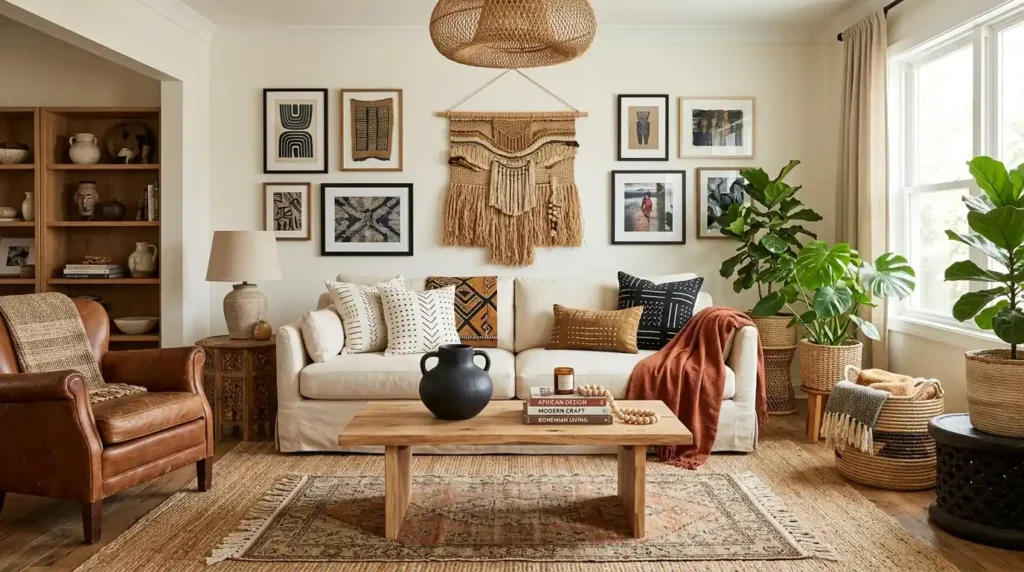
Walk into a home filled with woven baskets, mud-cloth throw pillows, and a wall of carved masks next to a macrame hanging, and you are looking at one of the most talked-about design movements heading into 2026. Afrohemian decor blends the warmth of African craftsmanship with the free-spirited layering of bohemian style, and it is quickly becoming a favorite among homeowners who want their space to feel personal instead of catalog-perfect.
This guide breaks down what the style actually means, where it comes from, and how you can bring it into your own home without turning the room into a mismatched mess.
Afrohemian Decor Meaning
At its core, the afrohemian decor meaning is a fusion of two design traditions. “Afro” points to African textiles, patterns, and handmade objects, while “bohemian” brings in the relaxed, collected-over-time feel that boho interiors are known for. Put the two together, and you get rooms that lean earthy, textured, and full of story.
It is not a strict rulebook. Some designers focus heavily on West African prints and pottery, while others pull in East African art or North African rugs. What ties every version together is a shared respect for handcrafted materials, warm color choices, and pieces that carry cultural meaning rather than mass-produced filler.
Where the Trend Came From
The style did not appear overnight. Bohemian decor has circled through interiors since the 1960s, moving in and out of fashion with beaded curtains, rattan chairs, and plant-heavy corners. What changed recently is a stronger, more intentional spotlight on African design traditions within that bohemian frame, rather than African elements being used as a passing accent.
Designers and homeowners are now sourcing directly from African artisans, learning the meaning behind specific patterns, and choosing pieces that reflect real craftsmanship. This shift has pushed afro chic home decor from a niche Pinterest board into a recognized style category that major interior publications are covering heading into 2026.
Key Elements of Afrohemian Home Decor
A well-balanced Afrohemian home decor scheme usually includes a handful of recurring building blocks. You will typically see:
Warm, earthy wall colors paired with white or cream bases to keep the room from feeling heavy. Layered textiles, including throws, cushions, and wall hangings made from cotton, mud cloth, or raffia. Sculptural accessories such as carved stools, clay vessels, and beaded objects placed on open shelving. Greenery in woven planters, since bohemian rooms rarely skip plants.
The trick is restraint. Afrohemian spaces look full but never cluttered, because each piece earns its place instead of competing for attention.
Afrohemian Decor Color Palette
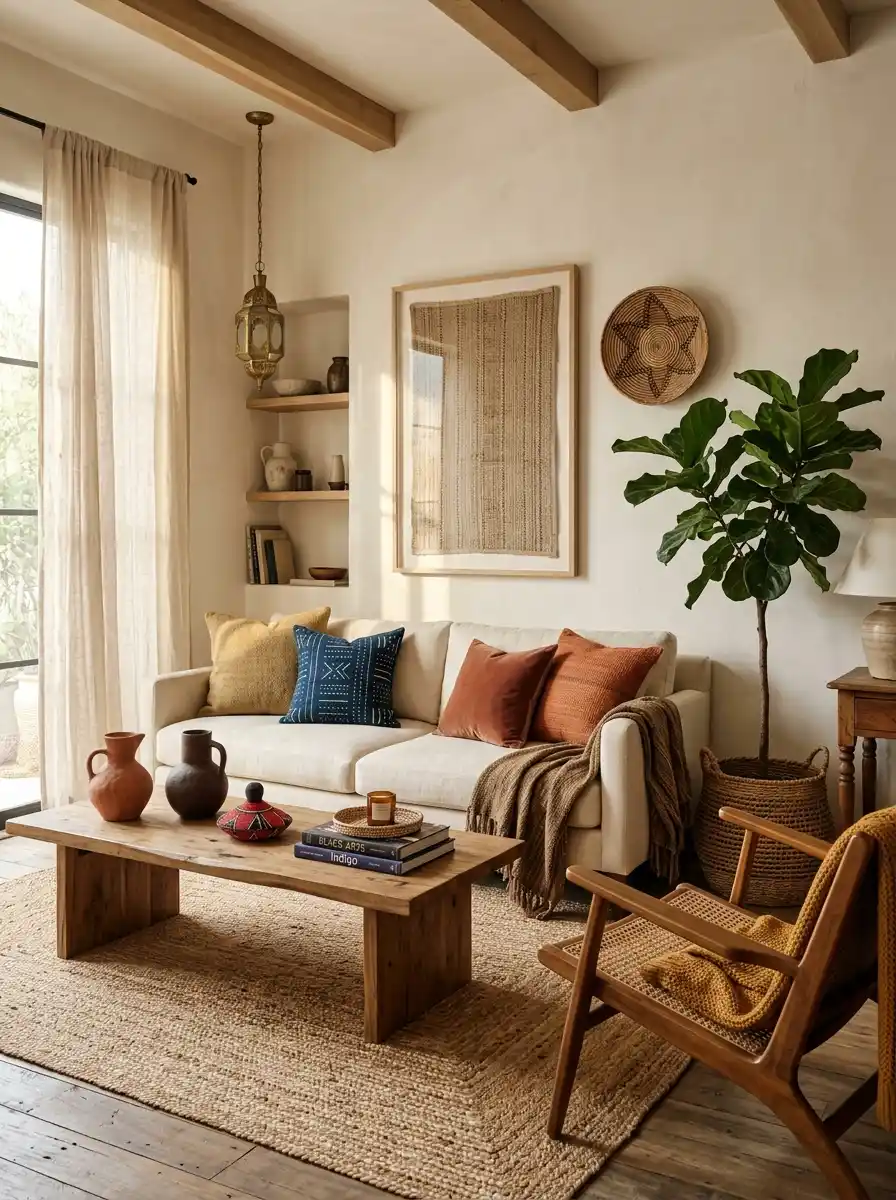
Color sets the tone for the entire look, and the Afrohemian decor color palette usually stays grounded in nature. Think terracotta, ochre, deep browns, burnt orange, and dusty greens. These shades come from clay, wood, and dyed fabrics, so they naturally feel connected to the materials used throughout the room.
Bright accents show up in small doses. A mustard cushion, a strip of indigo fabric, or a beaded object in red and black can lift the palette without pulling it away from its earthy base. Most designers recommend keeping walls in a neutral or warm off-white so the textiles and art carry the color story instead of the paint.
Nigerian Textiles in Home Decor
Nigerian textiles in home decor have become one of the most requested elements within this trend, and it is easy to see why. Aso oke, adire, and ankara fabrics bring bold geometric patterns and rich dye work that instantly ground a room in African tradition. Adire, a resist-dyed indigo cloth, works especially well as a statement throw pillow or framed textile art piece.
These fabrics also hold up well in high-use spaces. A dining chair reupholstered in ankara print, or a runner made from aso oke, adds pattern without needing to repaint or remodel anything structural.
Ethiopian Wall Art and Decor Pieces
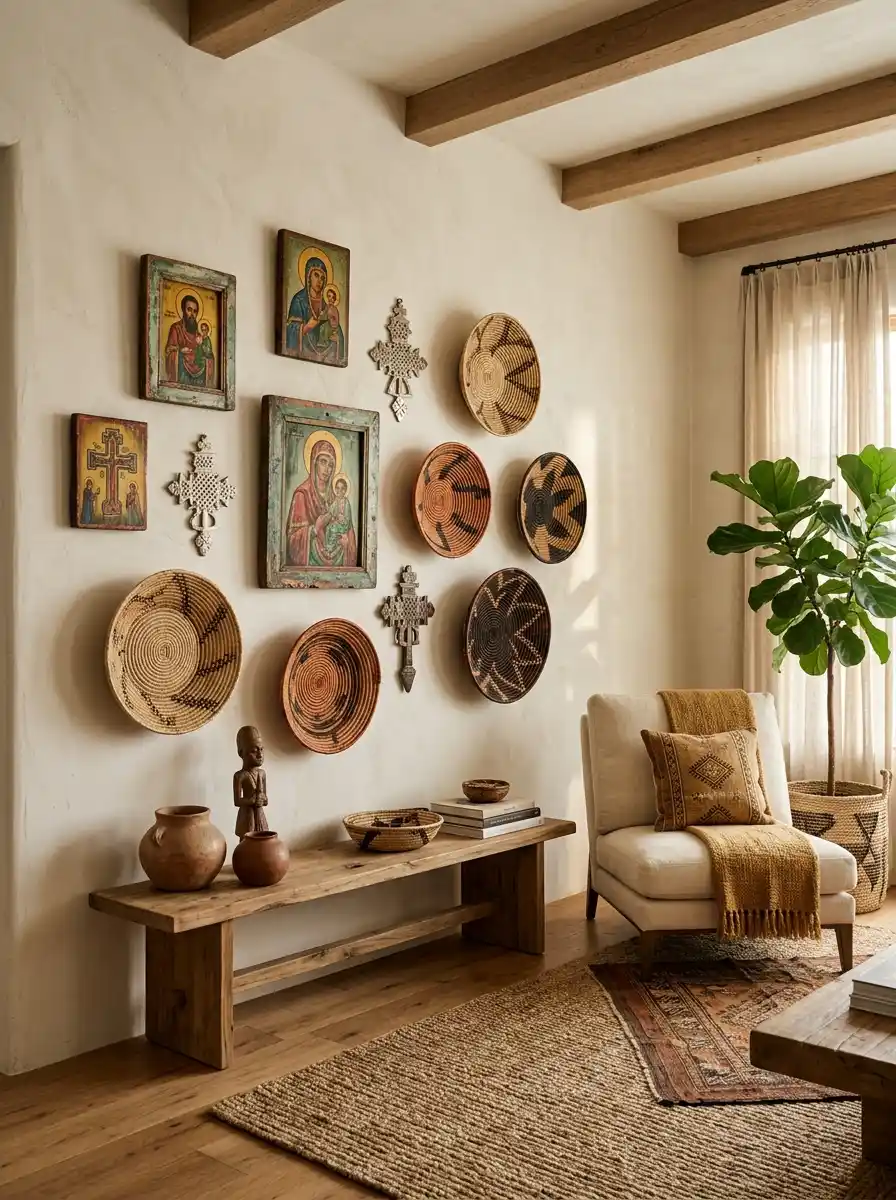
Wall art carries a lot of the storytelling weight in this style. Ethiopian wall art decor often features hand-painted religious icons, cross motifs, and woven basket art known as mesob designs. These pieces bring texture and history to a wall that would otherwise stay flat and empty.
Grouping a few smaller pieces together, rather than hanging one large frame, tends to work better in Afro-bohemian rooms. It echoes the layered, collected feel that defines the whole style and gives you room to add new finds over time without redoing the entire wall.
Natural Fiber Rugs and Texture
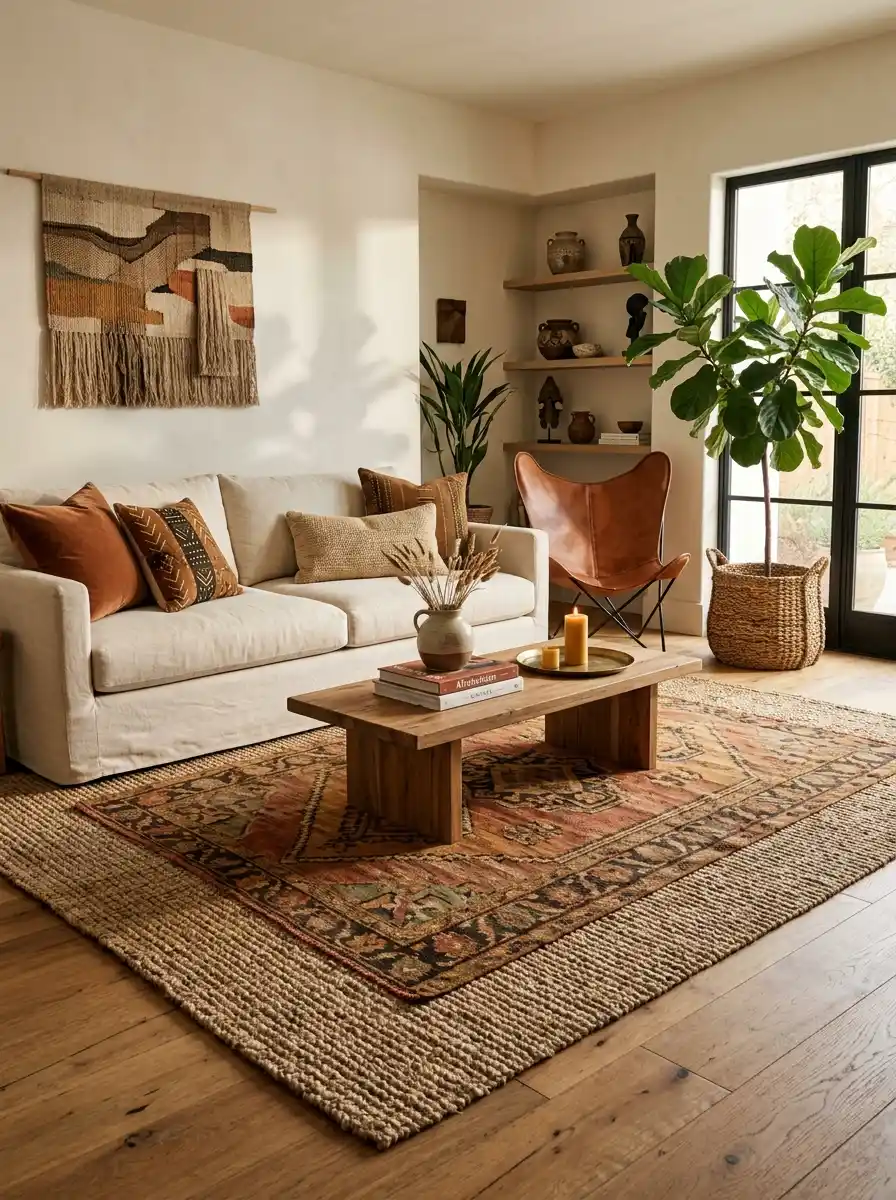
Flooring matters just as much as walls. Natural fiber rug decor choices, including jute, sisal, and seagrass weaves, anchor the room and add texture underfoot. These materials pair naturally with the earthy palette and hold up well in busy living rooms or dining areas.
Layering rugs is common in this style too. A neutral jute base topped with a smaller patterned kilim gives you depth without overwhelming the floor. It also softens the transition between the natural fiber texture and softer furniture pieces like linen sofas or velvet cushions.
Designing an African Boho Living Room
The living room tends to be where this style shows up first, since it is the space guests see and where families spend the most time. An African boho living room usually starts with a neutral sofa base in linen, cotton, or a light bouclé fabric, with living room decor ideas helping to balance furniture, textiles, and accessories. From there, layer in patterned cushions, a floor pouf, and a low wooden coffee table with visible grain.
Lighting plays a bigger role than people expect. Rattan pendant fixtures or woven floor lamps keep the warm, handmade feel going after sunset, while candles in clay holders add a softer glow for evenings.
How to Create Afrohemian Style at Home
If you are wondering how to create Afrohemian style at home without a full renovation, start small and build gradually.
Begin with one accent wall or a gallery of African art instead of repainting the whole room. Add textiles first, since a few cushions or a throw blanket cost less than furniture and make an immediate difference. Bring in one or two sculptural pieces, such as a carved stool or a clay pot, and balance them with modern home decor items that complement the room’s natural textures and earthy palette. Swap your rug for a natural fiber option if your current floor covering feels too polished or synthetic. Shop from artisan marketplaces or fair-trade sellers when possible, since authenticity is a big part of what makes this style feel genuine rather than staged.
Most homeowners find that the room comes together over several months, not a single weekend, and that slower pace actually fits the bohemian spirit of the style.
Afrohemian Interior Design vs Traditional Bohemian
People often ask how Afrohemian interior design differs from the boho look that has been popular for years. Traditional bohemian decor draws from a wide mix of global influences, including Moroccan, Indian, and South American sources, blended loosely together. Afrohemian narrows that focus specifically toward African craftsmanship and pattern work, giving the room a clearer cultural through-line.
This distinction matters for anyone trying to shop intentionally. A generic boho pillow from a big-box store will not carry the same weight as a hand-dyed adire cushion sourced from a Nigerian textile maker, even if they look similar in a photo.
Common Questions About Getting Started
Many people ask whether this style works in small apartments or rentals. It does, since most elements are removable, including rugs, wall art, and textiles that never require permanent changes. Renters can lean on tapestries instead of paint and swap out cushions and lighting fixtures when they move.
Budget is another frequent concern. You do not need to source every piece from an artisan overnight. Start with two or three meaningful items, then build the rest of the room around them using more affordable textiles and secondhand furniture finds.
Conclusion
Afrohemian decor gives homeowners a way to build rooms that feel warm, textured, and personal instead of following a strict design formula. By grounding the space in earthy colors, natural materials, and handcrafted African pieces, you create a home that tells a story rather than just filling square footage. Whether you start with a single wall hanging or plan a full living room refresh, the style rewards patience and thoughtful sourcing over quick, one-time purchases.
FAQs
Is afrohemian decor the same as boho chic?
No. Boho chic pulls from many global styles loosely mixed together, while afrohemian decor centers specifically on African textiles, art, and craftsmanship within that relaxed bohemian framework.
What colors work best for this style?
Earthy tones like terracotta, ochre, deep brown, and dusty green form the base, with small pops of indigo, mustard, or red used as accents.
Can I use this style in a small space?
Yes. Textiles, wall art, and rugs are the easiest entry points and work in apartments or rentals without any permanent changes.
Where can I buy authentic pieces?
Artisan marketplaces, fair-trade retailers, and small businesses that work directly with African makers are the best sources for genuine textiles and decor objects.
How long does it take to decorate a room in this style?
Most people build the look gradually over several months, adding pieces one at a time rather than buying everything at once.