

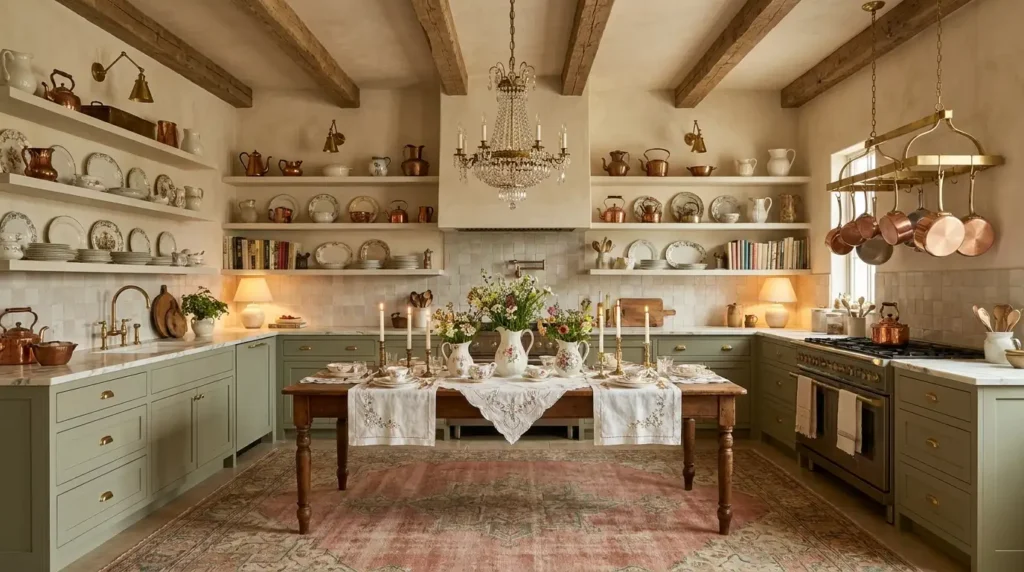
There’s something about walking into a grandmacore kitchen that makes you exhale. The mismatched china. The hand-stitched dish towels. The faint smell of something always simmering on the stove. It feels lived-in and loved, not staged for Instagram.
That feeling isn’t an accident. It’s a very specific aesthetic, and right now, it’s having a serious moment. The grandmacore kitchen decor trend is all about warmth, nostalgia, and layering in things that tell a story. The good news? You don’t need to gut your kitchen to get there.
In this article, I’m sharing 11 real, actionable ideas to bring that cozy vintage charm into your kitchen today. Whether you’re renting or remodeling, there’s something here for you.
Quick Takeaway: What You’ll Learn
- How to choose the right colors and patterns for a grandma’s kitchen aesthetic
- Where to find vintage pieces without spending a fortune
- Which small details make the biggest impact
- What mistakes to avoid when building this look
1. Start With a Soft, Muted Color Palette
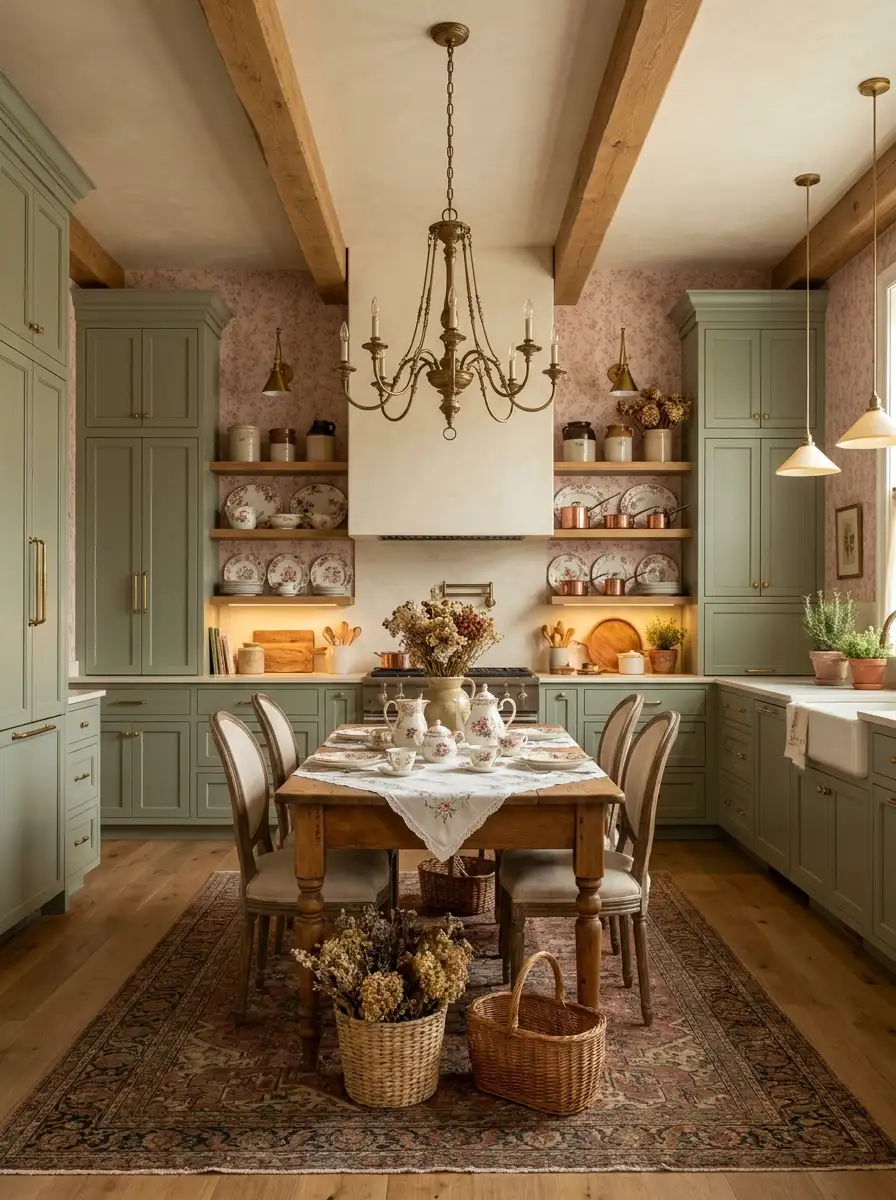
The grandmacore aesthetic lives and dies by its color choices. Think sage green, dusty rose, butter yellow, cream, and pale lavender. These colors feel gentle and slightly faded, like they’ve been there for decades.
I always tell people: avoid anything too crisp or bright. A pure white kitchen reads as modern. A warm cream with slightly scuffed cabinet edges? That’s grandmacore.
How to do it: If you’re not repainting cabinets, start smaller. Swap out a bright backsplash tile for a soft floral wallpaper, or add a sage-green curtain over an open shelf. Color does the heavy lifting here.
2. Layer in Mismatched Floral China
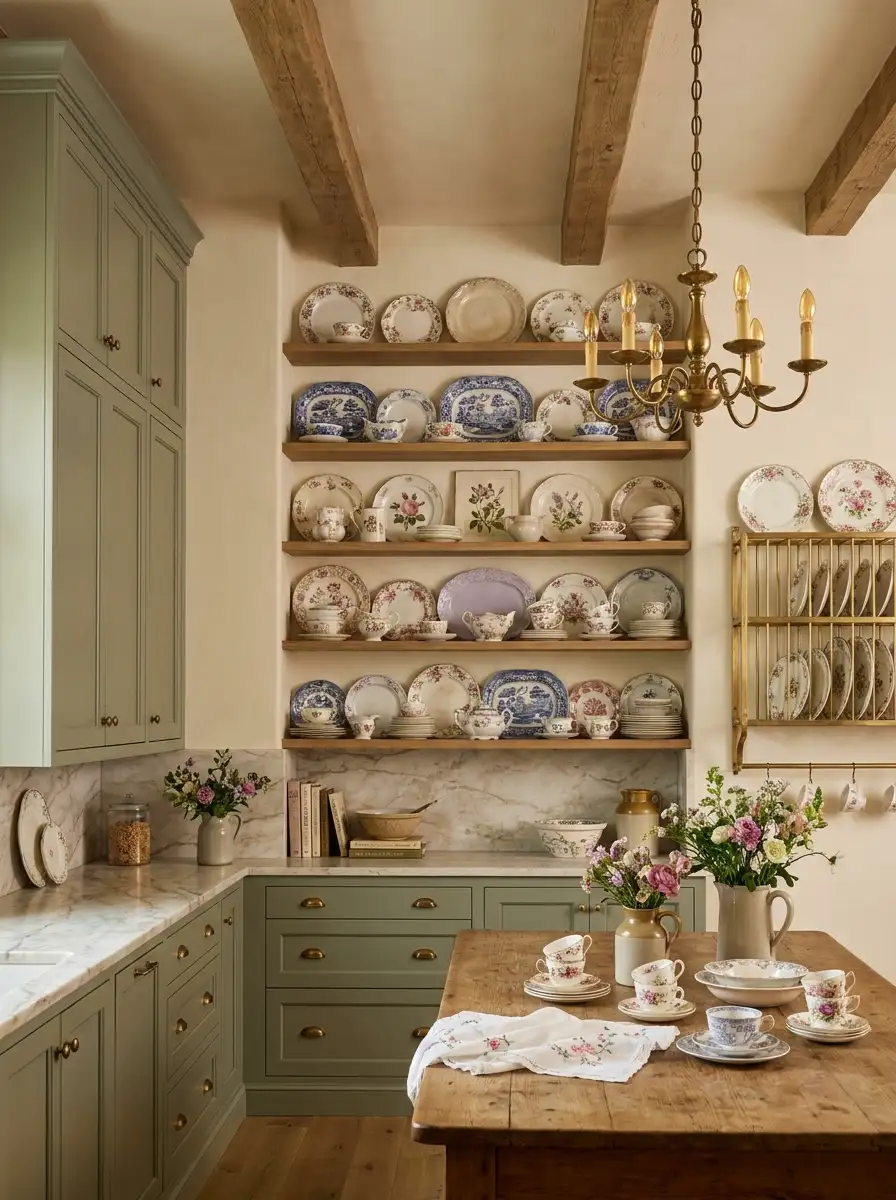
Nothing says grandma kitchen aesthetic quite like a collection of mismatched floral plates displayed on open shelves or a plate rack. The keyword is “mismatched.” Not a perfectly curated set. Not matchy-matchy.
Each piece should look like it came from a different place, because it probably did. That’s the point. This is a collection built over a lifetime.
Where to find them: Thrift stores, estate sales, and Facebook Marketplace are goldmines. Look for transferware patterns in blue and white, pink roses on cream, or botanical illustrations on off-white porcelain. Budget around $1 to $5 per piece.
Common mistake: People over-arrange. A plate rack with every plate perfectly spaced looks like a store display. Let a few be slightly uneven. Let one face sideways. Real life looks like that.
3. Use Lace or Embroidered Curtains on Windows
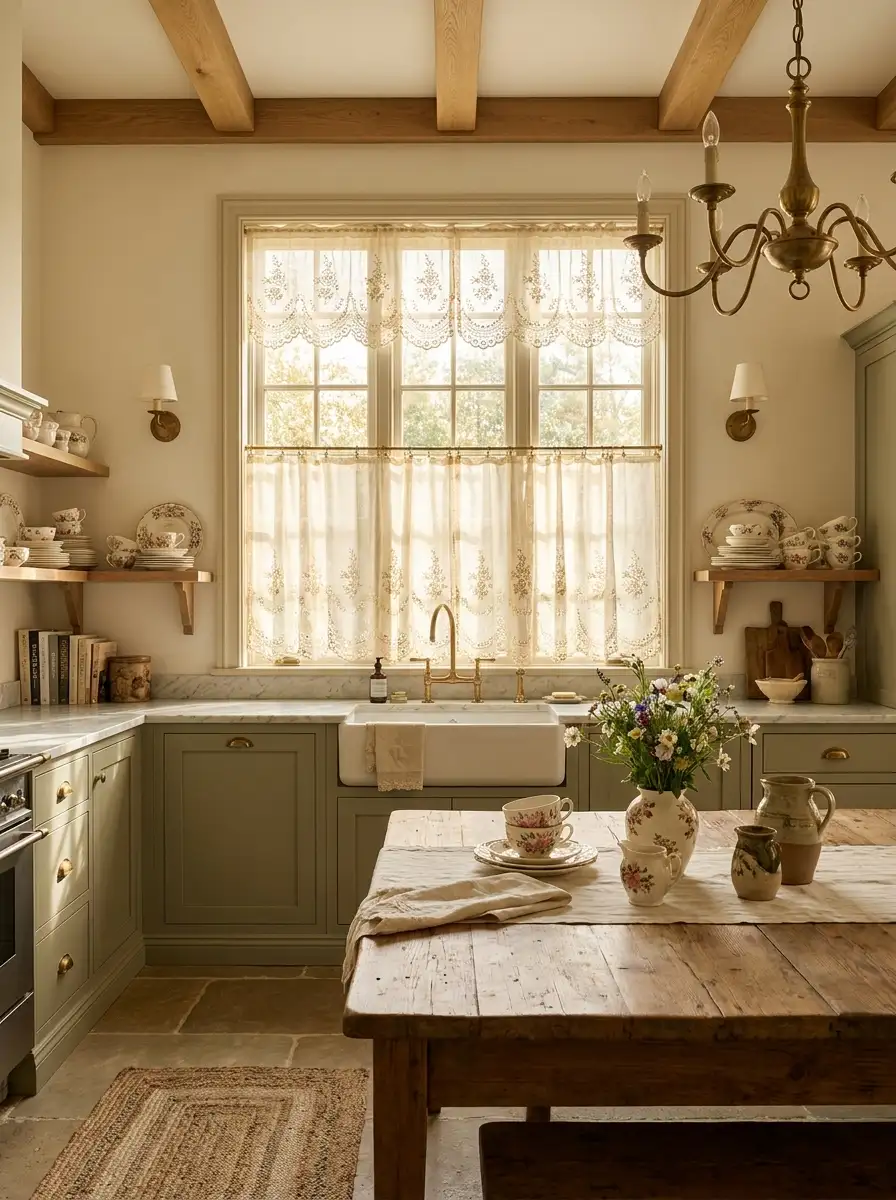
Kitchen windows in a grandmacore space should never have sleek Roman blinds or modern roller shades. You want soft, slightly sheer curtains with lace trim, embroidered edges, or a delicate pattern.
Cafe curtains work especially well here. They cover the lower half of the window, letting light in from the top while adding that nostalgic layer you need.
Fabric to look for: Cotton voile, eyelet fabric, or genuine vintage lace panels. Avoid polyester sheers. They don’t drape the same way, and under natural light they look flat and cheap.
I hung a pair of eyelet cotton cafe curtains in my own kitchen last spring. Cost me $18 from a craft store. They changed the entire feel of the room in under ten minutes.
4. Bring In Open Shelving With Collected Clutter (on Purpose)
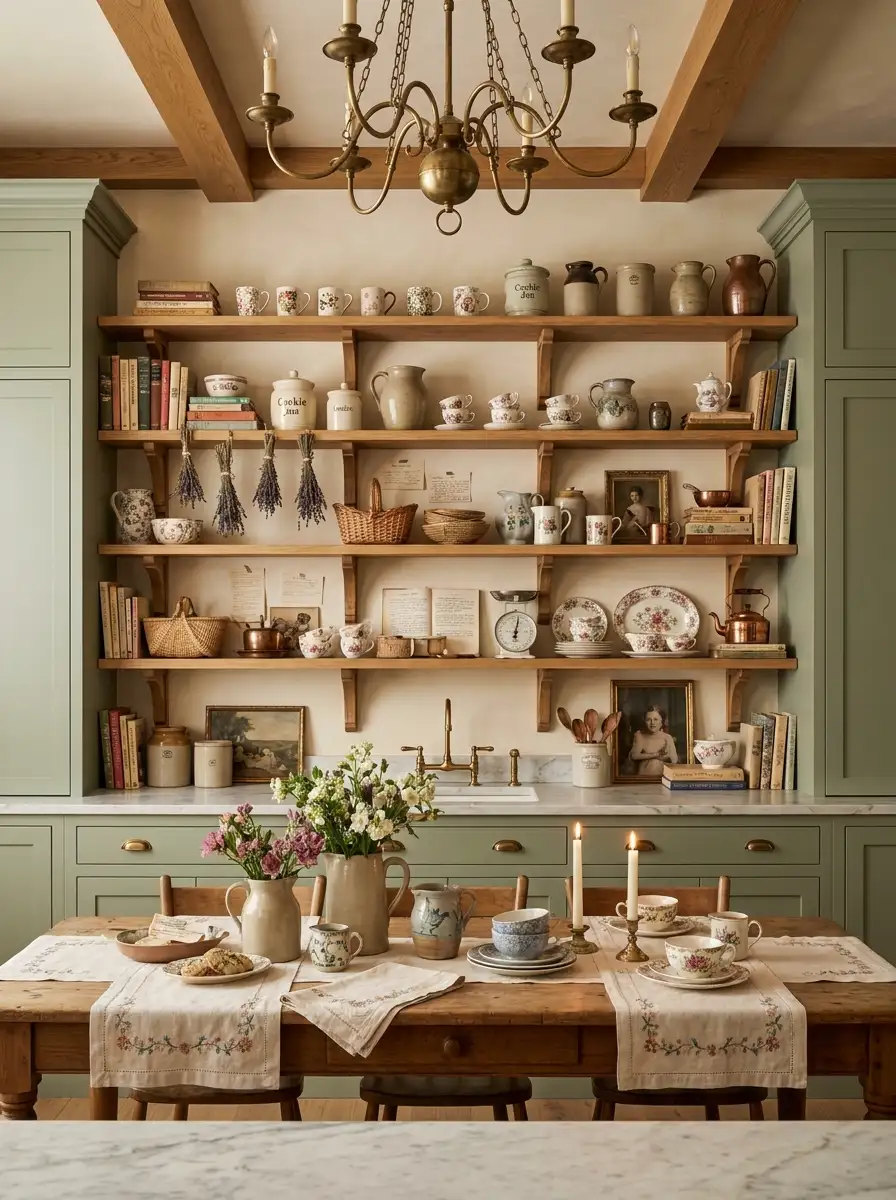
In a modern kitchen, open shelves are used. In a grandmacore kitchen, they’re full. But it’s not chaos. It’s curated clutter.
Think stacked vintage cookbooks, a row of mismatched mugs, a small ceramic cookie jar, dried herb bundles, and a stoneware pitcher or two. Every item has a reason to be there.
The rule I follow: If you can’t tell a one-sentence story about why something is on the shelf, it doesn’t belong. A mug from your grandmother’s collection? Yes. A branded freebie mug from a conference? No.
Practical tip: Use wooden shelves with visible brackets, not floating shelves. Wooden brackets read as vintage. Floating shelves read as a design studio.
5. Add a Tablecloth With a Classic Pattern
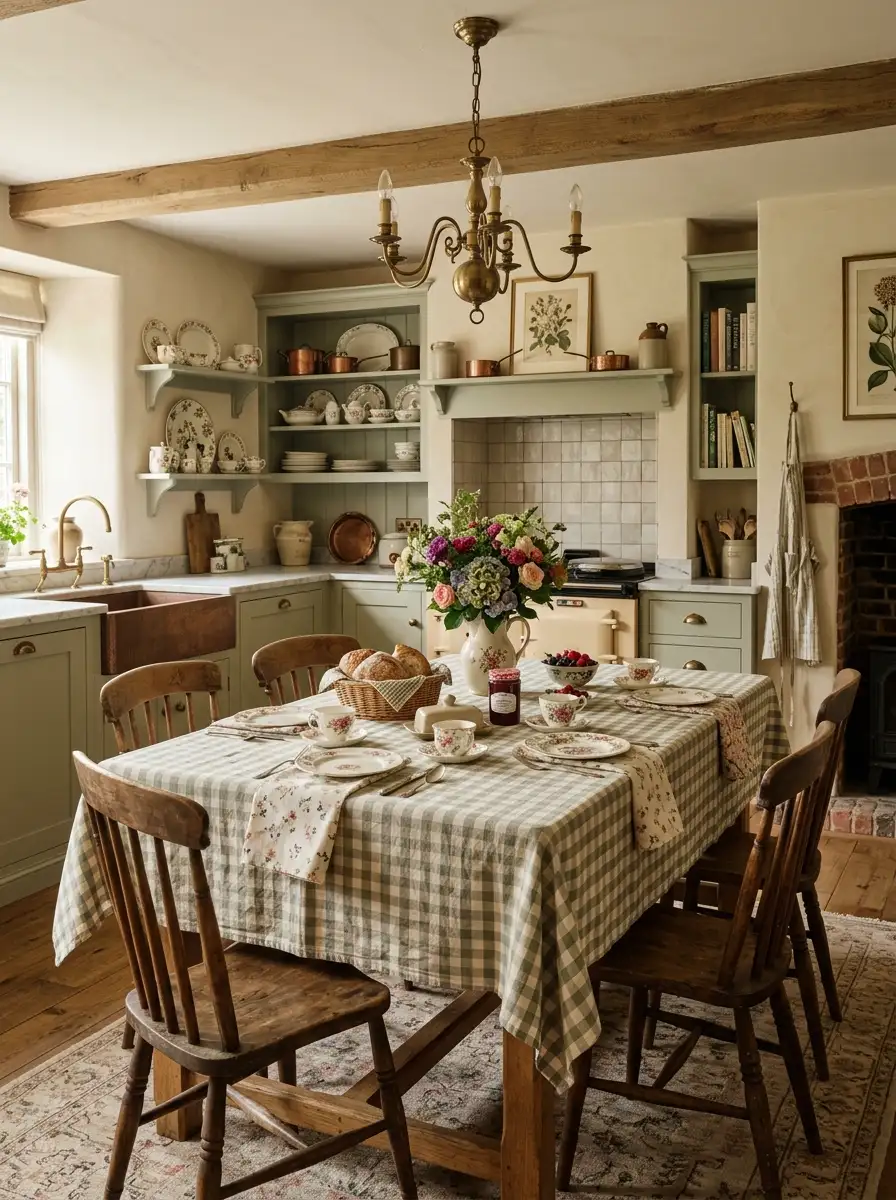
Modern kitchens have bare tables or minimalist placemats. The grandmacore kitchen has a tablecloth. Always.
Look for classic gingham in red or blue, botanical floral prints, or a simple striped cotton in cream and sage. The fabric should be cotton or linen, not plastic-coated vinyl. Even if it wrinkles, it looks more authentic.
Layer it with mismatched cloth napkins for extra effect. You don’t need to fold them perfectly. That’s kind of the whole vibe.
6. Display Vintage Cookware and Canisters
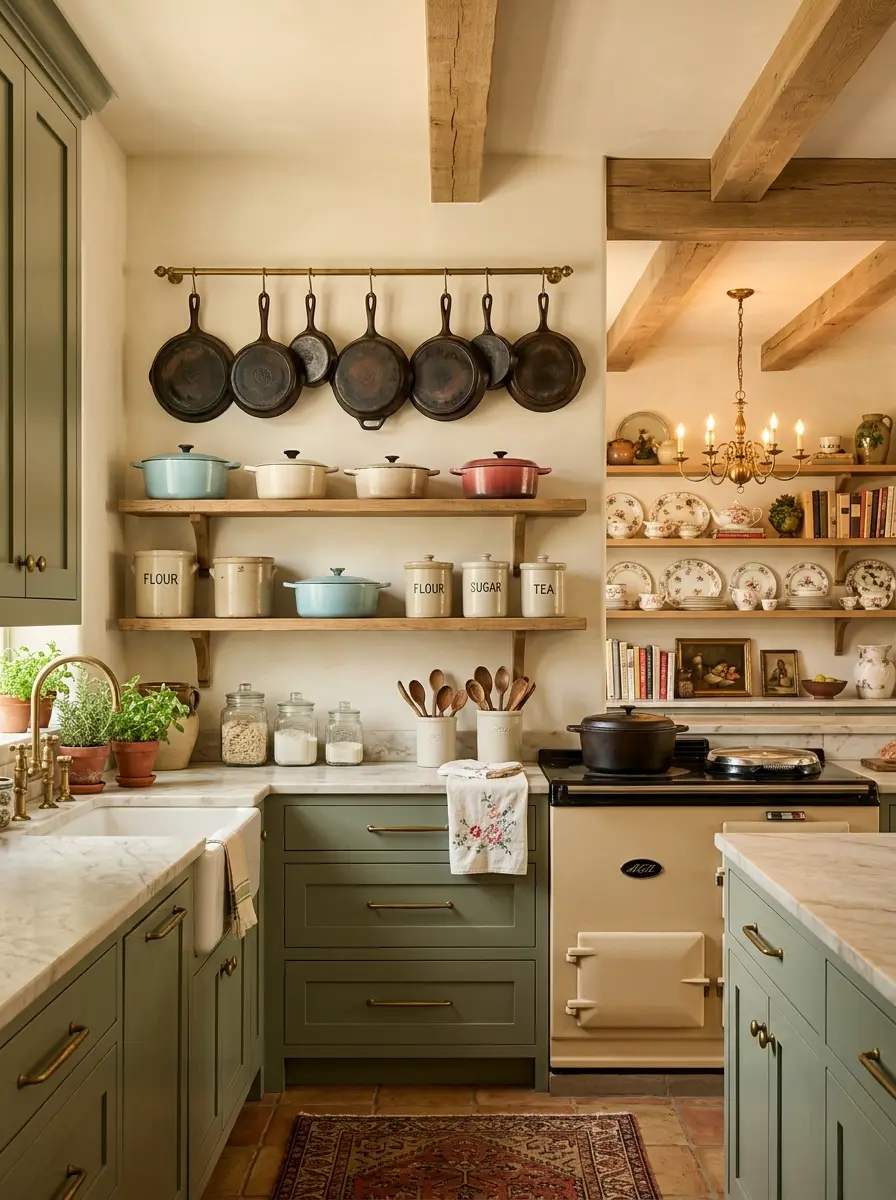
Your appliances and storage can do decorative work in a grandmacore kitchen. Cast iron pans hung on a wall, enamelware pots in muted colors, stoneware canisters labeled “flour,” “sugar,” “tea.”
What works best:
- Lodge cast iron skillets (they look instantly vintage even when new)
- Vintage enamelware in robin’s egg blue, cream, or red
- Stoneware crocks or salt-glazed pottery
- Depression-era glass canisters with metal lids
These items are functional AND decorative. That’s the granny core aesthetic in a nutshell. Nothing exists just to look pretty. Everything serves a purpose.
7. Hang a Fabric Pot Holder or Hand-Embroidered Towel
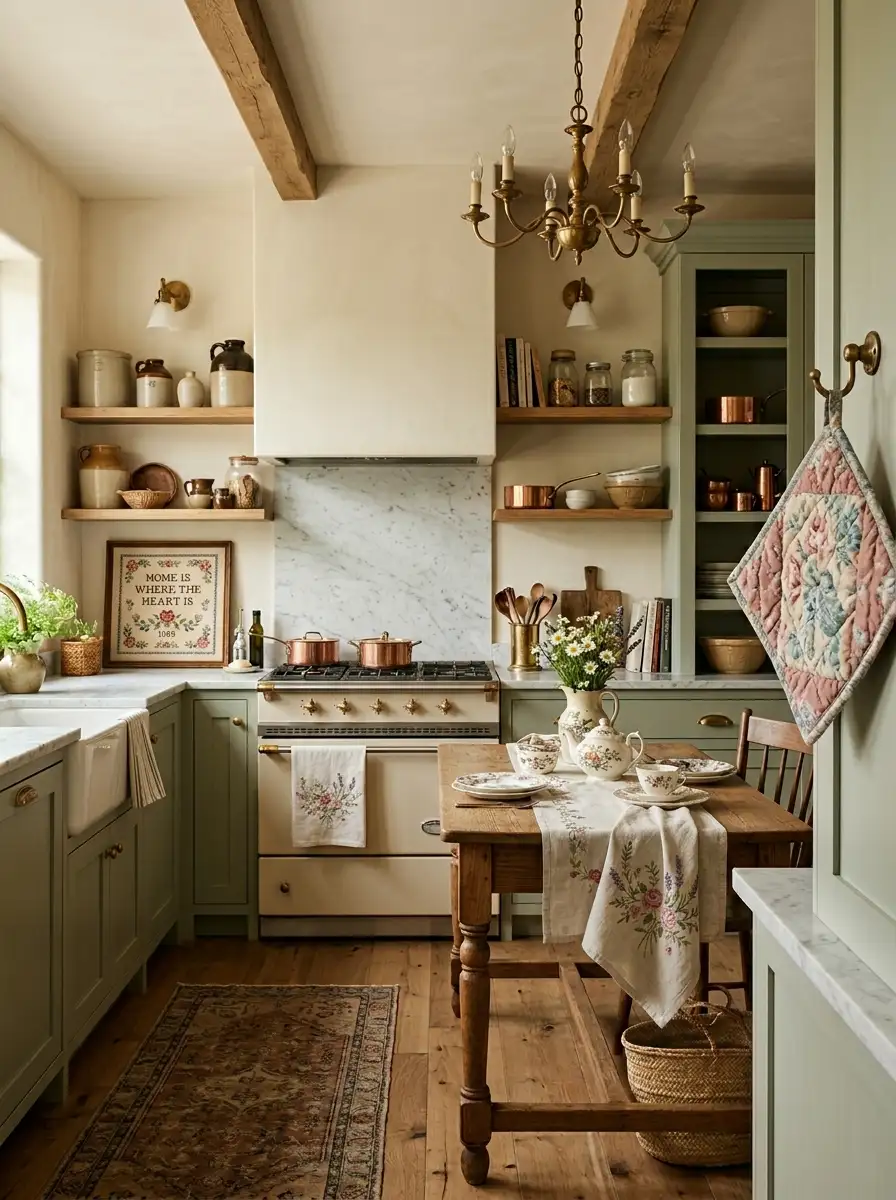
Small textiles add enormous warmth. In a grandmacore kitchen, the little things matter more than the big things.
A hand-embroidered dish towel hanging from the oven handle. A quilted pot holder in a vintage pattern is pinned to the wall. A cross-stitched sampler that says something wholesome near the sink.
These items cost almost nothing, and they carry more personality than a $300 light fixture.
Where to find them: Etsy has an incredible range of handmade embroidered kitchen textiles. Search for “vintage cross stitch kitchen” or “hand-embroidered linen towels.” Budget $10 to $30 per piece.
8. Put a Small Vase of Wildflowers or Dried Botanicals on the Counter
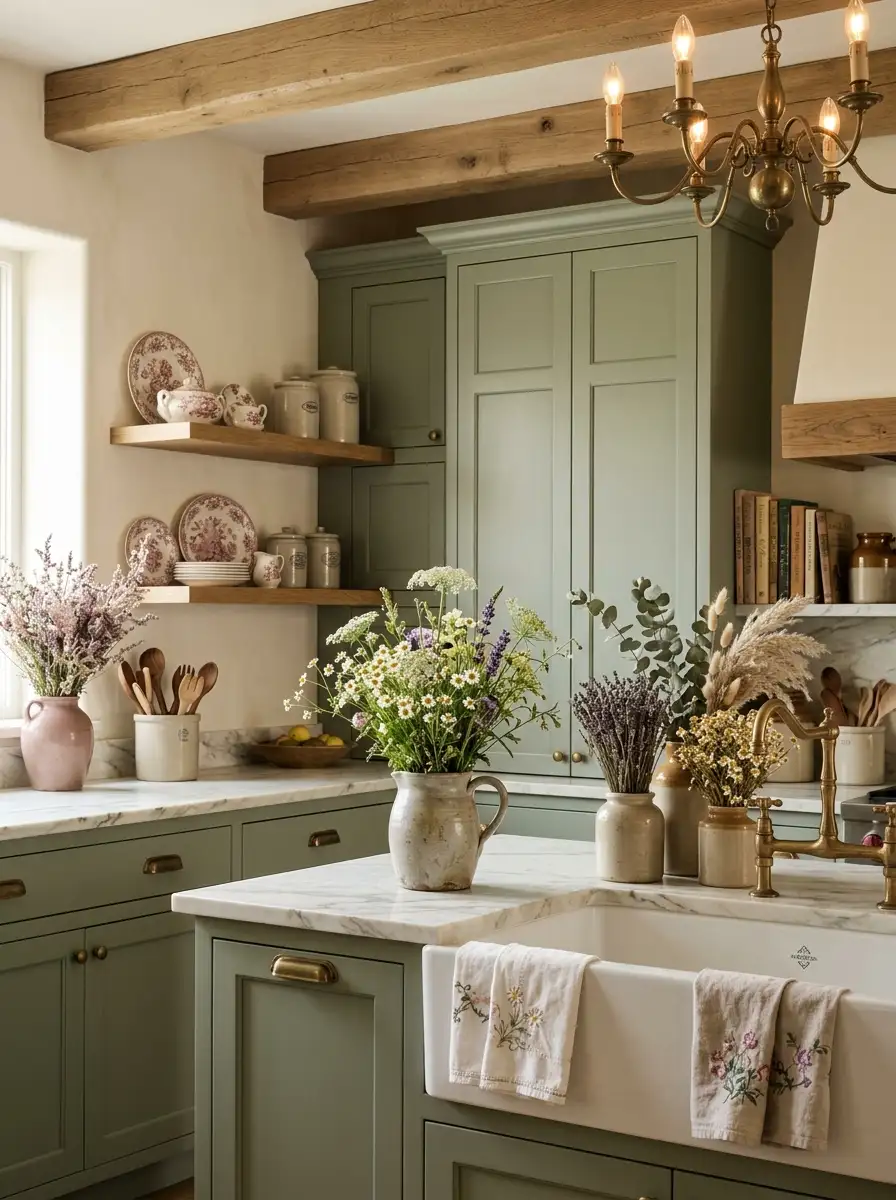
Fresh flowers are always the right answer in a grandmacore kitchen. But not arranged flowers. Not a formal bouquet. We want wildflowers shoved into a small ceramic pitcher or a mason jar.
If fresh flowers aren’t practical, dried botanicals work beautifully. Dried lavender, dried chamomile, pampas grass, or eucalyptus in a small pottery vase. They last for months and smell incredible.
The granny core aesthetic is all about things that grow and live and breathe. A small vase of dried flowers near the window signals that someone who loves this kitchen actually lives in it.
9. Layer in a Vintage-Style Rug or Runner
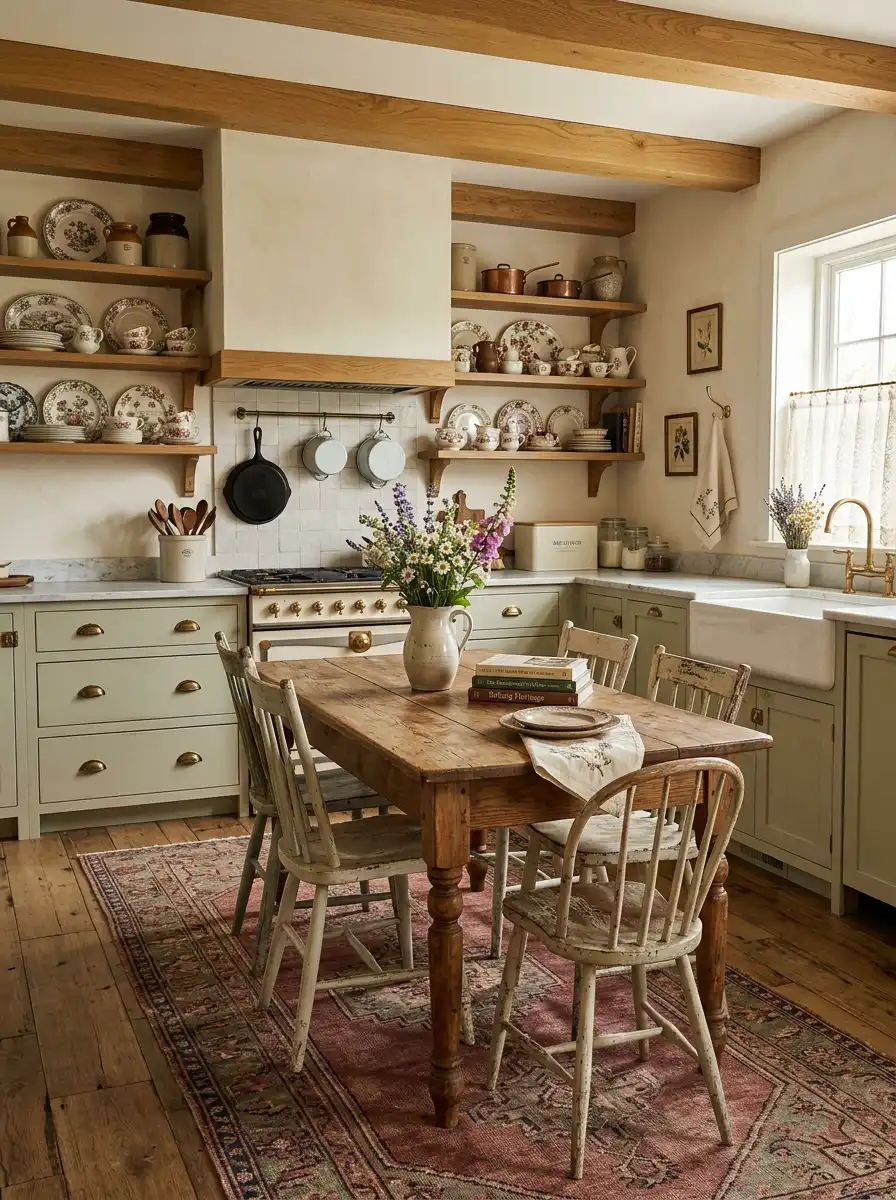
Bare kitchen floors feel modern and cold. A patterned rug or runner instantly softens the space and reinforces the grandmacore aesthetic.
Look for:
- Braided oval rugs in earthy tones
- Faded Persian-style runners in red, navy, or green
- Floral needlepoint rugs (check Wayfair or eBay)
- Simple cotton rag rugs in stripes or checks
A rug in a kitchen also absorbs sound, which makes the space feel quieter and cozier. It’s a practical addition, not just a decorative one.
Sizing tip: For a galley kitchen, a 2×6 or 2×8 runner works well. Placement matters too, the same rules that apply to how to position a rug in a living room work perfectly in a kitchen.
If the sizing feels confusing, choosing the right rug size doesn’t have to be — the same logic applies here.
10. Use Warm, Ambient Lighting Instead of Overhead Fluorescents
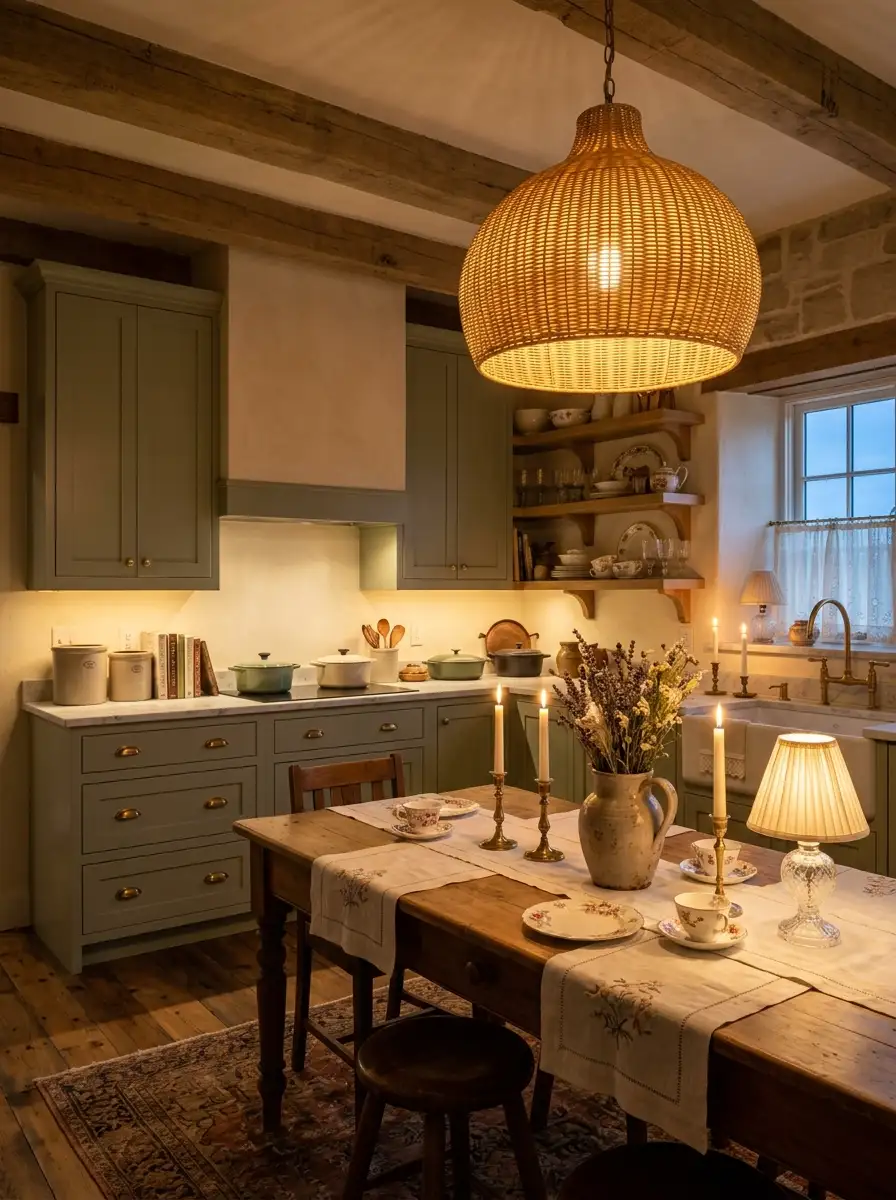
Lighting transforms how a space feels more than almost anything else. And nothing kills a grandmacore kitchen faster than harsh overhead fluorescent lighting.
The grandma kitchen aesthetic relies on warm, layered light. Think:
- Under-cabinet lighting with warm bulbs (2700K color temperature)
- A vintage-style pendant light over the table or island
- A small lamp on a counter or shelf
- Candles when cooking in the evening
If you can’t change your overhead lighting, put it on a dimmer. A dimmer switch costs $15 and changes everything. The same thinking applies when layering light in your home beyond just the kitchen.
I installed a rattan pendant over my kitchen table three years ago. Best $45 I’ve ever spent on this room.
11. Add a Cookbook Collection as Decor
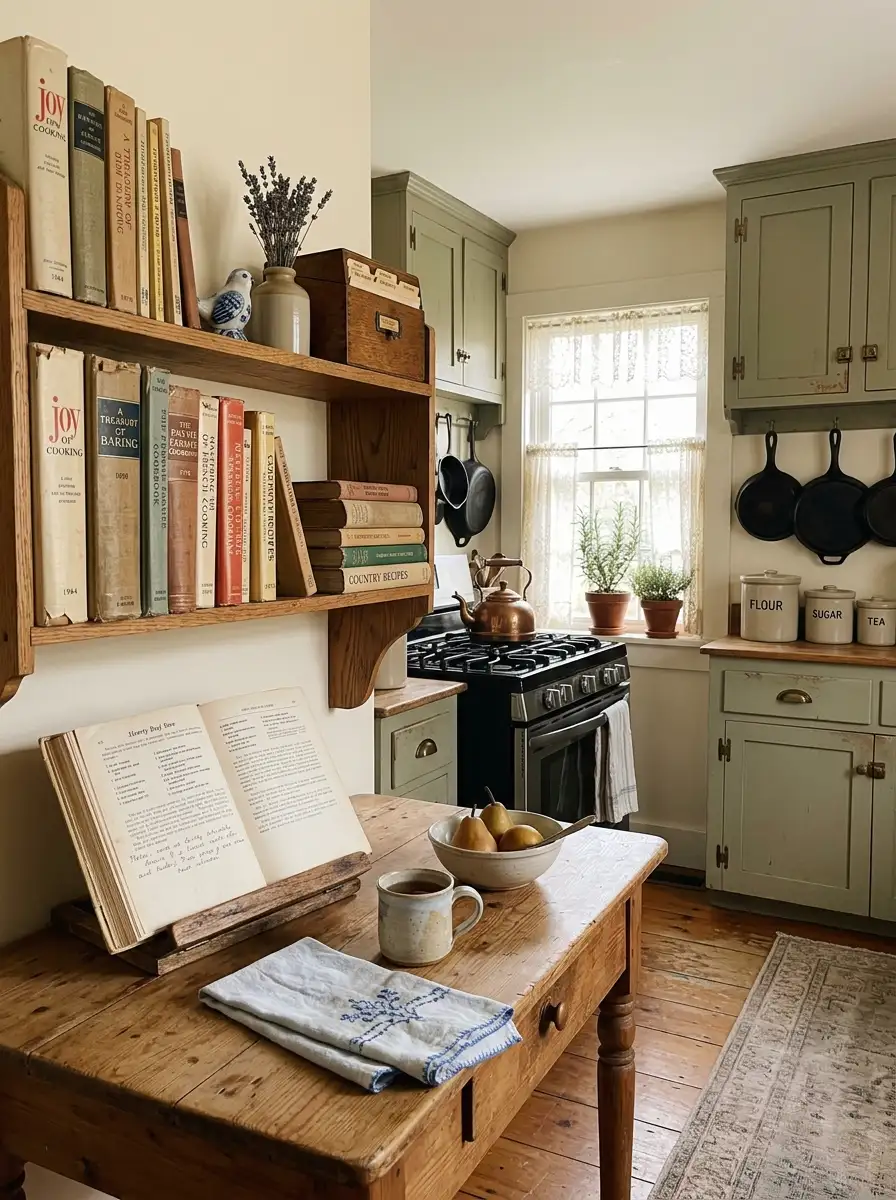
In a grandmacore kitchen, cookbooks are not stored in a cabinet. They live on a shelf, a counter, or a small cookbook stand where anyone can see them.
Old cookbooks are especially powerful. Vintage Betty Crocker editions, Southern Living annuals from the 1970s and 80s, community cookbooks from church fundraisers. These books have patina. They look like they’ve actually been used.
Display them with the spines facing out in varied heights. Add a small ceramic figurine or a dried flower bundle next to them. Let the stack look slightly imperfect.
Pro tip: Thrift stores almost always have a cookbook section. You can build a collection of 8 to 10 beautiful vintage cookbooks for under $20.
Conclusion
The grandmacore kitchen isn’t about buying a specific set of products. It’s about layering things that feel warm, personal, and a little bit worn. You don’t need to do all 11 ideas at once.
Start with one thing. A tablecloth. A plate rack. A vase of dried flowers. Live with it for a week and see how it feels. Then add another layer.
That slow, intentional building is exactly how your grandmother built her kitchen. And that’s exactly what makes it feel so good to be in.
If this layered, lived-in style speaks to you, rustic decor ideas are worth exploring next.
FAQ’s
What exactly is the grandmacore kitchen aesthetic?
Grandmacore is an interior design trend that celebrates the cozy, nostalgic warmth of a traditional grandmother’s home. In the kitchen, this means mismatched vintage dishes, soft floral patterns, handmade textiles, cast iron cookware, and a general sense that this space has been loved for decades. It’s the opposite of minimalism. It embraces warmth, clutter, and character.
Is grandmacore the same as cottagecore?
They overlap, but they’re not identical. Cottagecore leans into the British countryside, florals, and an idealized pastoral life. Grandmacore is more personal and domestic. It’s less “Pinterest meadow” and more “real kitchen where someone actually cooks.” Think cross-stitched samplers and cast iron pans, not fairy lights in a garden shed.
How do I achieve the grandma kitchen aesthetic on a tight budget?
Thrift stores and estate sales are your best friends. Most grandmacore pieces, mismatched china, lace curtains, vintage cookbooks, and ceramic canisters are things people donate constantly. A $30 thrift store haul can transform a kitchen. Start with curtains and a tablecloth first. They’re cheap and they immediately shift the mood.
Can I do grandmacore decor in a modern kitchen with white cabinets?
Yes. Modern white cabinets are actually a great canvas for this aesthetic. Add open shelving and fill it with mismatched dishes. Hang lace curtains. Put a gingham tablecloth on your table. Use warm-toned lighting. The bones of the kitchen matter less than the layers you add on top.
What’s the biggest mistake people make with granny core decor?
Over-curating. People see the aesthetic on Pinterest and try to replicate it perfectly. But grandmacore isn’t a set to design. It’s a feeling to build over time. Add pieces gradually. Let things be imperfect. A slightly chipped mug or a wrinkled tablecloth isn’t a flaw. It’s the whole point.